

Social Media Advertising: The Strategic Playbook for Canadian Business Growth
Organic reach on social platforms has plummeted to near-zero for businesses. If you rely solely on posting content to your feed without a budget behind it, you are speaking to an empty room. To truly capture attention in a saturated market, you must pivot from social networking to social selling.
Social media advertising is no longer an optional "experiment" for Canadian companies; it is a fundamental engine for revenue. Whether you are a local retailer in Vancouver or a B2B SaaS provider in Toronto, the ability to pay for placement, target exact demographics, and track return on ad spend (ROAS) is what separates stagnant brands from market leaders.
This guide provides a comprehensive breakdown of how to build, manage, and scale high-performance social ad campaigns. We will move beyond the basics of "boosting posts" and explore the technical, creative, and strategic layers required to turn scrolling users into paying customers. You will learn how to navigate the complex ecosystem of platforms, adhere to Canadian advertising regulations, and leverage data to refine your approach continuously.
Key Takeaways
- Pay-to-Play is the Standard: Organic strategies build brand loyalty, but paid advertising drives immediate lead generation and sales. You cannot scale without a budget.
- Platform Intent Matters: A LinkedIn user is in a different mindset than a TikTok user. Your creative assets and offer must match the platform's native environment.
- Creative is the New Targeting: As privacy laws restrict data tracking, the quality of your video and image creative is the primary lever for finding your audience.
- Data Hygiene is Critical: With the loss of third-party cookies, implementing server-side tracking (CAPI) and owning your first-party data is non-negotiable.
- Testing Never Stops: The "set it and forget it" method burns budget. Continuous A/B testing of headlines, hooks, and audiences is required to maintain ROI.
The Evolution of Social Advertising in Canada
The digital landscape in Canada has shifted dramatically over the last five years. We have moved from an era where "likes" were the primary metric of success to a performance-based environment where every dollar spent must be accountable to a business outcome.
The Shift from Vanity Metrics to Revenue
In the early days of social media, businesses chased follower counts. Today, a million followers mean nothing if they don't convert. Modern social media advertising focuses on the bottom of the funnel. You need to track specific actions: purchases, lead form submissions, app installs, and booked appointments.
Canadian consumers are highly connected, with internet penetration rates among the highest in the world. However, they are also discerning. They have developed "banner blindness" and can spot a generic ad from a mile away. To break through, your advertising must feel native to the feed. It should entertain or educate first, and sell second.
The Impact of Mobile-First Consumption
Over 80% of social media consumption happens on mobile devices. This dictates every aspect of your advertising strategy. Your landing pages must load instantly on 4G/5G networks. Your videos must be shot in 9:16 vertical format to occupy the full phone screen. Your copy must be legible without zooming.
If you design your ads on a desktop monitor without previewing them on a mobile interface, you are likely wasting your budget. The user experience (UX) from the ad click to the checkout page must be seamless. Friction at any point in this journey will cause bounce rates to spike and conversion rates to plummet.
The "Walled Garden" Ecosystems
Social platforms like Meta (Facebook/Instagram), TikTok, and LinkedIn operate as "walled gardens." They keep user data within their own ecosystems to maximize their ad revenue. This means you cannot easily transfer audience data from one platform to another. You must build specific strategies for each garden.
Understanding this fragmentation is key. You cannot simply resize a Facebook ad for TikTok and expect it to work. Each platform has its own algorithm, its own culture, and its own rules of engagement. Success requires respecting these nuances while maintaining a cohesive brand voice across all channels.
Setting Strategic Goals and Defining KPIs
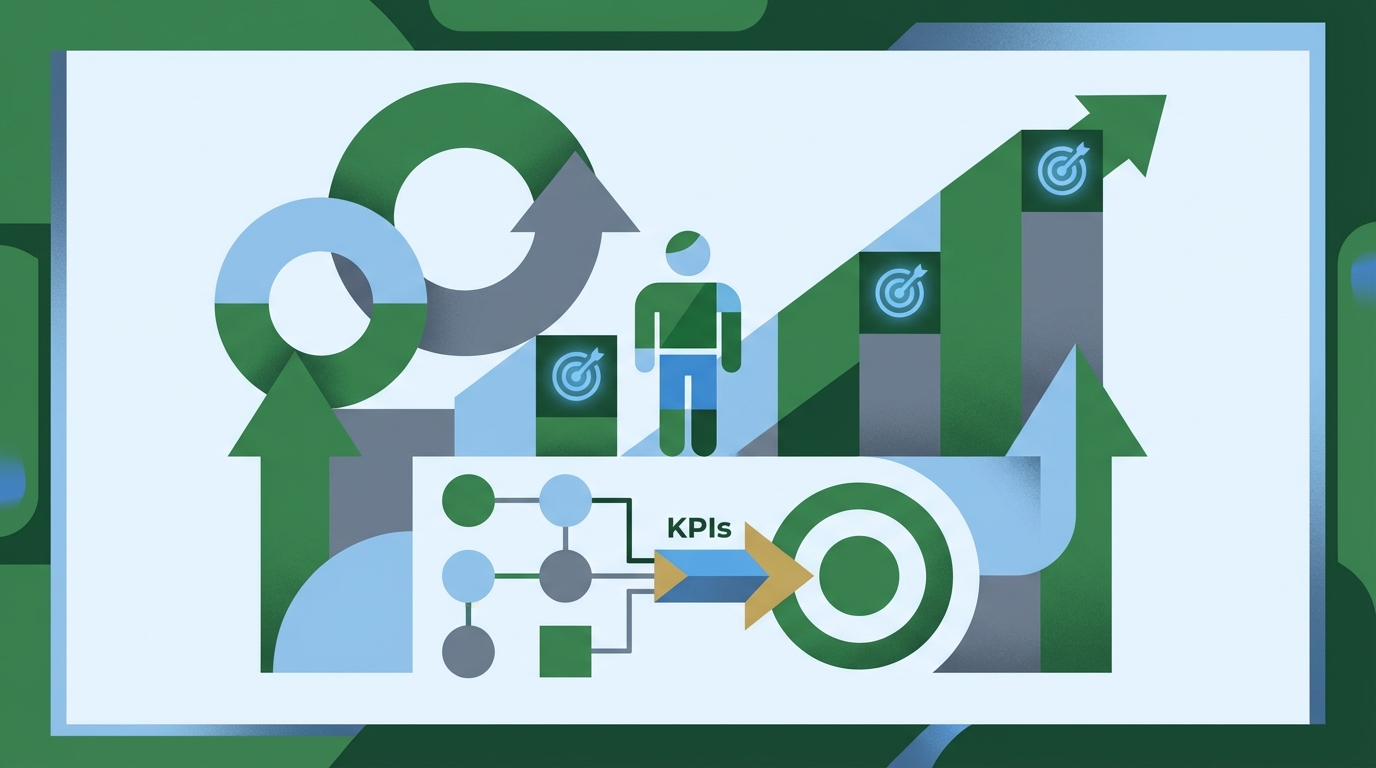
Before you spend a single dollar, you must define exactly what success looks like. A campaign without a clear objective is just a donation to the social media platforms. Your goals dictate your bid strategy, your creative approach, and the metrics you analyze.
The Marketing Funnel Approach
Social advertising is most effective when mapped to the customer journey. You should divide your budget across three distinct phases:
- Top of Funnel (TOFU) – Awareness: The goal is to reach new people who don't know you exist.
- KPIs: Reach, Impressions, Video Views, Cost Per Thousand Impressions (CPM).
- Strategy: Broad targeting, educational content, viral-style videos.
- Middle of Funnel (MOF) – Consideration: The goal is to engage people who have shown interest (e.g., watched your video or visited your site).
- KPIs: Click-Through Rate (CTR), Landing Page Views, Cost Per Click (CPC).
- Strategy: Traffic campaigns, lead magnets, newsletter signups.
- Bottom of Funnel (BOF) – Conversion: The goal is to get the credit card or the contract.
- KPIs: Purchases, Leads, Return on Ad Spend (ROAS), Cost Per Acquisition (CPA).
- Strategy: Retargeting, dynamic product ads, limited-time offers.
ROAS vs. ROI: Knowing the Difference
Many marketers confuse Return on Ad Spend (ROAS) with Return on Investment (ROI).
- ROAS measures gross revenue generated for every dollar spent on ads. If you spend $100 and make $500, your ROAS is 5x.
- ROI accounts for all costs, including goods sold, agency fees, and software.
To truly maximize your marketing ROI through targeted campaigns, you need to look beyond the platform metrics. A campaign might show a high ROAS inside Facebook Ads Manager, but if your profit margins are thin, your actual business ROI could be negative. You must integrate your ad data with your backend financial data to get the full picture.
Setting Realistic Benchmarks
Benchmarks vary wildly by industry. A real estate agent might be happy with a $50 cost-per-lead, while an e-commerce store selling $20 socks needs a cost-per-acquisition under $10.
- E-commerce: Focus on ROAS (aim for 300%+).
- B2B Services: Focus on Lead Quality and Cost Per Sales Qualified Lead (SQL).
- Local Business: Focus on Cost Per Message or Cost Per Appointment.
Don't panic if your metrics don't match global averages. Establish your own baseline after 30 days of testing, then aim to improve that baseline month over month.
Platform Selection: Aligning Channel with Demographics
Not every business needs to be on every platform. Spreading your budget too thin across five channels is a recipe for failure. It is better to dominate one channel than to be mediocre on three.
Meta (Facebook & Instagram): The Essential Duo
For most B2C and many B2B businesses, Meta remains the primary driver of social ad revenue.
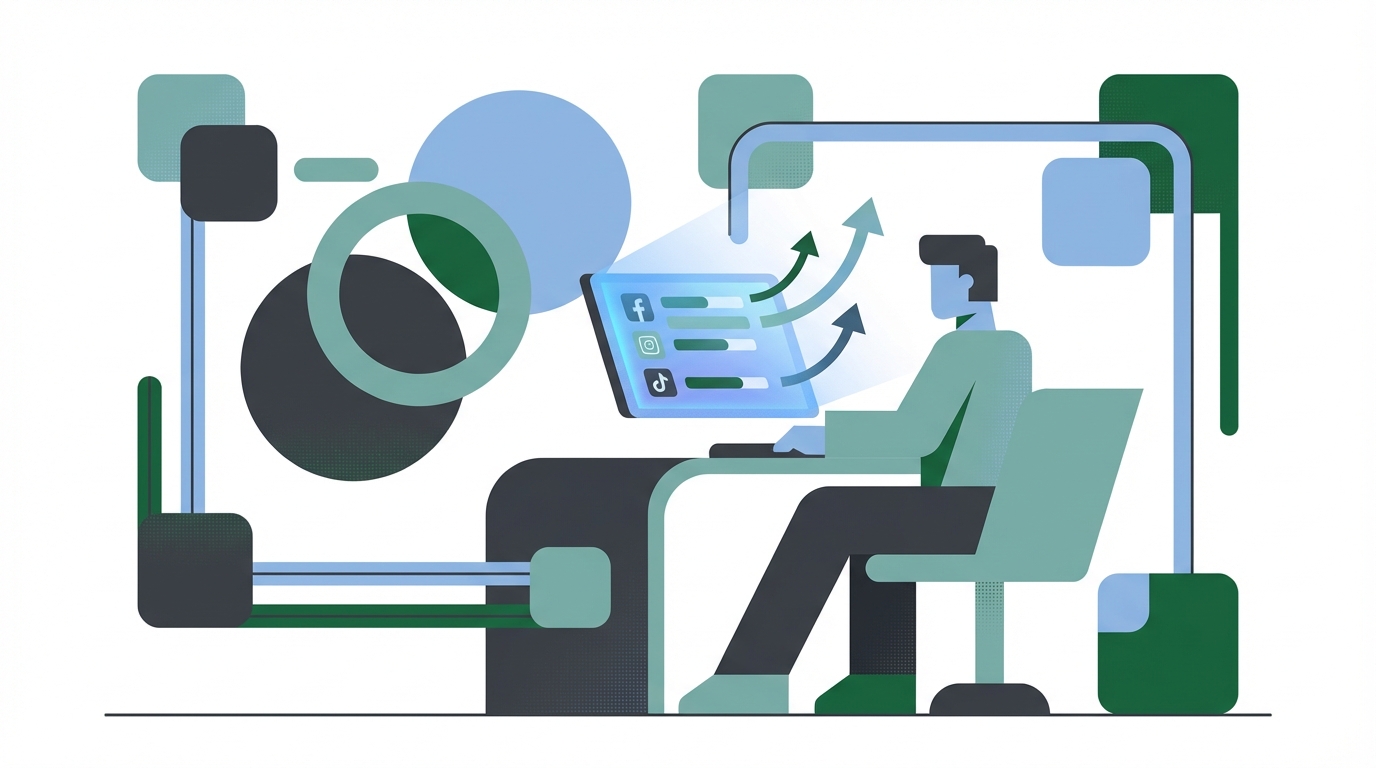
- Facebook: Despite rumors of its demise, it remains the largest platform. It is exceptional for reaching older demographics (35+), parents, and local community groups. Its "Lead Form" ads are powerful for service businesses.
- Instagram: The visual powerhouse. Ideal for e-commerce, fashion, food, and lifestyle brands. Instagram Stories and Reels offer immersive, full-screen ad experiences that drive high engagement.
LinkedIn: The B2B Powerhouse
If you sell software, consulting, or industrial equipment, LinkedIn is non-negotiable. The cost per click is significantly higher than Meta (often $5–$10+ per click), but the intent is professional.
- Targeting: You can target by job title, company size, industry, and even specific skills.
- Ad Formats: Sponsored Content, Message Ads (InMail), and Text Ads.
- Strategy: Use LinkedIn to distribute whitepapers, case studies, and webinar invites.
TikTok: The Viral Engine
TikTok is no longer just for dancing teenagers. It is a search engine and a discovery platform for Gen Z and Millennials.
- Creative Requirement: Ads must look like user-generated content (UGC). Polished, "ad-like" videos perform poorly here.
- Spark Ads: This format allows you to boost organic posts (yours or a creator's), which adds authenticity and improves conversion rates.
Pinterest: The Visual Search Engine
Pinterest users are planners. They use the platform to plan weddings, renovations, and meals.
- Mindset: Users are in a "future purchase" mindset.
- Verticals: Home decor, DIY, beauty, and fashion thrive here.
- Longevity: Unlike a tweet that disappears in minutes, a Pinterest pin can drive traffic for months.
Comparative Table: Choosing Your Battlefield
| Platform | Best For | Primary Demographic | Cost Level | Key Ad Format |
|---|---|---|---|---|
| Local Biz, Lead Gen, E-comm | 25 – 65+ | Moderate | Image/Video Feed | |
| Visual Brands, Shopping | 18 – 40 | Moderate | Reels/Stories | |
| B2B, Recruitment, SaaS | 25 – 55 (Pro) | High | Sponsored Content | |
| TikTok | Viral Products, Gen Z | 16 – 30 | Low/Moderate | UGC Video |
| Discovery, Planning | Women 25-50 | Moderate | Shopping Pins |
Targeting Capabilities and Audience Segmentation
The power of social media advertising lies in its ability to show the right message to the right person. However, privacy changes (like Apple's iOS14 update) have forced a change in strategy. We can no longer rely solely on the algorithm to know everything about a user; we must guide it.
Core Audiences (Cold Targeting)
This is targeting based on demographics, interests, and behaviors.
- Demographics: Age, gender, location (down to the postal code in Canada).
- Interests: Pages they like, topics they engage with (e.g., "Physical fitness," "Small business owners").
- Behaviors: Purchase behaviors, device usage, travel habits.
Warning: As algorithms get smarter, hyper-segmenting interests can actually hurt performance. Modern best practice often involves "broad targeting"—giving the AI a wide audience (e.g., "Women in Canada, 25-50") and letting the creative content filter the audience.
Custom Audiences (Warm Targeting)
These are your most valuable assets. You create these audiences using your own data.
- Customer Lists: Upload your email list of past purchasers.
- Website Visitors: People who viewed your site (requires a Pixel/Tag).
- Engagement Audiences: People who watched 50% of your video or saved your Instagram post.
Retargeting these warm audiences usually yields the highest ROAS. For example, you can show a specific ad only to people who added a product to their cart but didn't checkout.
Lookalike Audiences
Once you have a high-quality Custom Audience (e.g., a list of your top 1000 customers), you can ask the platform to find a "Lookalike." The algorithm analyzes the common traits of your best customers and finds the top 1% of people in Canada who match that profile.
To effectively execute this, you must follow the essential steps to getting started with a robust strategy for data collection. If your source data is bad (e.g., a list of low-quality leads), your Lookalike audience will also be low quality.
Creative Best Practices for High Conversion
In 2025, creative is the primary variable for success. The algorithm can find your audience, but your creative must convince them to stop scrolling. You have roughly 1.7 seconds to capture attention on a mobile feed.
The "Hook-Body-CTA" Framework
Every video ad should follow this structure:
- The Hook (0-3 seconds): A visual or auditory interruption. A controversial statement, a surprising visual, or a direct question ("Struggling with X?").
- The Body (3-15 seconds): Deliver value. Show the problem and your solution. Demonstrate the product in use. Use social proof.
- The CTA (End): Tell them exactly what to do. "Click Shop Now," "Sign Up," "Learn More."
Static vs. Video Assets
- Video: Generally outperforms static images for Top of Funnel (Awareness). It builds trust and conveys more information.
- Static Images: Often work better for Retargeting (Bottom of Funnel). A clean image of the product with a discount code is often all a warm lead needs to convert.
- Carousels: Excellent for storytelling or showcasing a catalog of products.
The Power of User-Generated Content (UGC)
Glossy, high-production TV commercials often fail on social media because they look like ads. UGC—content that looks like it was created by a regular person on their phone—performs exceptionally well. It feels authentic. Partnering with creators or simply shooting unpolished content on an iPhone can often outperform a $10,000 studio production.
Creative Fatigue: Social media eats creative for breakfast. You cannot run the same ad for months. You need to refresh your creative every 2-4 weeks to prevent "ad fatigue," where your audience ignores your ads because they've seen them too many times.
Budgeting and Bidding Strategies
How much should you spend? This is the most common question, and the answer depends on your risk tolerance and goals.
The Testing Budget
Never launch a campaign with your full budget. allocating 10-20% of your total budget to a "Testing Phase."
- Test 3-5 different images/videos.
- Test 2-3 different headlines.
- Test 2 different audiences.
Run these tests for 3-7 days. Turn off the losers and shift the remaining budget to the winners.
Bidding Strategies: Controlling Costs
Platforms offer different ways to bid for ad space:
- Lowest Cost (Auto-Bid): The platform gets you the most results for your budget. Best for beginners.
- Cost Cap: You tell the platform, "I don't want to pay more than $20 per lead." The platform will stop spending if it can't find leads at that price. Good for protecting margins.
- Bid Cap: You control the maximum amount you bid in the auction. Advanced strategy for scaling.
Scaling: Vertical vs. Horizontal
When you find a winning ad, you want to scale it.
- Vertical Scaling: Increasing the budget on the winning campaign. Caution: Do not increase budget by more than 20% every few days, or you risk resetting the algorithm's learning phase.
- Horizontal Scaling: Taking the winning creative and launching it to new audiences or on new platforms.
Understanding the mechanics of PPC advertising is fundamental here. While social ads are "push" marketing (interrupting users) and search ads are "pull" marketing (capturing intent), the financial principles of bidding and budget allocation share many similarities.
The Role of AI and Automation
Artificial Intelligence has taken over the engine room of social advertising. Platforms like Meta and Google are pushing advertisers toward fully automated solutions.
Meta Advantage+ Shopping Campaigns
This is Meta's fully automated product for e-commerce. You upload your creative and your product catalog, and the AI handles the targeting, placement, and bidding. It dynamically combines your images and copy to serve the best variation to each user.
- Pros: incredibly efficient, requires less manual management.
- Cons: Less control, less data transparency (you don't always know who saw the ad).
Predictive Analytics
AI tools can now predict the likely performance of an ad before you even run it. They analyze the colors, text overlays, and pacing of your video to give it a "score."
When to Trust the AI (and When Not To)
Trust the AI for delivery (finding the right person at the right time). Do not trust the AI for strategy (determining your offer or your brand voice). You must still provide the high-quality inputs (creative and copy); the AI is merely the delivery mechanism.
Compliance, Privacy, and Canadian Regulations
Operating in Canada means adhering to specific legal frameworks. Ignorance of these laws can lead to account bans or legal action.
Ad Standards Canada
You must adhere to the Canadian Code of Advertising Standards. This includes:
- Accuracy: No misleading claims about price or performance.
- Testimonials: Must be genuine and verifiable.
- Safety: You cannot depict unsafe practices (e.g., driving without a seatbelt).
- Gender Portrayal: Avoid sexist stereotypes.
The guidelines provided by Ad Standards Canada regarding truth in advertising are rigorous. If a consumer files a complaint and it is upheld, you may be forced to pull your campaign publicly.
Privacy Laws (PIPEDA and Bill C-27)
The Personal Information Protection and Electronic Documents Act (PIPEDA) governs how you collect and use data.
- Consent: You must obtain explicit consent before tracking users via pixels or collecting their emails for marketing.
- Transparency: Your privacy policy must clearly state what data you collect and how you use it.
Special Categories
Housing, Employment, and Credit ads face strict anti-discrimination rules. You cannot target these ads based on age, gender, or postal code to prevent exclusion. If you are in these industries, your targeting options will be severely limited, and you must rely more heavily on broad targeting and creative messaging.
Analyzing Performance and Optimization
Data is useless if you don't know how to read it. Most advertisers drown in metrics that don't matter.
The Metrics That Actually Matter
Ignore "Vanity Metrics" like Likes and Shares unless your goal is purely brand awareness.
- CTR (Link Click-Through Rate): Indicates if your creative is interesting. If CTR is low (<1%), your ad creative is the problem.
- CPM (Cost Per Mille): Indicates how expensive the audience is. If CPM spikes, competition is high or your ad quality score is low.
- Conversion Rate: Indicates if your landing page is working. If you have high clicks but no sales, your ad is fine, but your website is the problem.
The Optimization Loop
- Hypothesize: "I think a video showing the product unboxing will drive more sales."
- Test: Run the ad against the current control.
- Analyze: Wait for statistical significance (usually 50+ conversions or significant reach).
- Iterate: If it wins, it becomes the new control. If it loses, learn why and try again.
To dominate the digital landscape requires a multi-channel approach to data. You should cross-reference your social ad data with Google Analytics 4 (GA4) to see the full attribution path. Often, a user sees a social ad, clicks, leaves, and later returns via Google Search to buy. If you only look at social data, you might undervalue your ads.
Integration with Broader Digital Marketing
Social media advertising does not exist in a vacuum. It works best when integrated with SEO, PPC, and Email Marketing.
The "Halo Effect" on Search
When you run aggressive social ads, you will often see a spike in "Branded Search" volume on Google. People see your ad on Instagram, don't click, but later Google your brand name. Strategies to dominate the digital landscape often involve bidding on your own brand keywords in Google Ads to capture this traffic.
Feeding the Email Machine
One of the most cost-effective strategies is using social ads to drive lead generation (e.g., "Download our Free Guide"). Once the user is on your email list, you can market to them for free. This lowers your overall Customer Acquisition Cost (CAC) because you aren't paying for every single interaction.
Synergy with Content Marketing
Your organic blog content can fuel your paid strategy. If a specific blog post is getting high organic traffic, it is a prime candidate to be turned into a video ad or a sponsored post. Reports from eMarketer highlight the shift toward this integrated content approach, where paid and organic teams work together rather than in silos.
FAQ: Common Questions on Social Advertising
How much does social media advertising cost in Canada?
Costs vary by platform and industry. On average, Facebook CPMs (cost per 1,000 impressions) in Canada range from $10 to $20 CAD. LinkedIn is significantly higher, often $30-$50+ CPM. However, the metric to focus on is CPA (Cost Per Acquisition). A $50 CPA is acceptable if your product sells for $200.
Should I hire an agency or do it in-house?
If your monthly ad spend is under $2,000, it is usually better to learn the basics and manage it in-house, as agency fees would eat up your budget. Once you are spending $5,000+ per month, the complexity of optimization, creative production, and tracking usually justifies hiring a specialist agency to ensure efficiency.
How long does it take to see results?
Platform learning phases typically take 7-14 days. During this time, performance may be volatile. You should expect to run a campaign for at least 3 months to gather enough data to optimize effectively. Social advertising is a marathon, not a sprint.
Why are my ads getting clicks but no sales?
This is usually a "post-click" issue. Your ad did its job (it got the click), but your landing page failed. Check your page load speed, pricing, trust signals (reviews), and checkout process. Ensure the message on the landing page matches the promise made in the ad.
Can I just boost posts instead of using Ads Manager?
"Boosting" is a simplified version of advertising with limited targeting and optimization options. It is fine for getting more likes on a photo, but for driving leads or sales, you must use the professional Ads Manager tools (Meta Ads Manager, LinkedIn Campaign Manager, etc.) to access advanced features like custom audiences and conversion optimization.
Conclusion: Mastering the Social Pay-to-Play
Social media advertising is the most powerful lever available to modern Canadian businesses. It allows you to bypass the noise, target your ideal customer with laser precision, and measure the impact of every dollar spent. However, the landscape is unforgiving. It rewards those who combine creative storytelling with rigorous data analysis, and it punishes those who rely on outdated tactics or lazy execution.
Success requires a commitment to testing, a willingness to adapt to platform changes, and a deep understanding of your customer's psychology. Whether you are scaling a startup or managing a legacy brand, the principles remain the same: capture attention, deliver value, and reduce friction.
If navigating the complexities of tracking pixels, creative testing, and bid strategies feels overwhelming, you do not have to do it alone. Finding the right partner can accelerate your growth and prevent costly mistakes.
Ready to scale your revenue with expert help?
DMA Canada is a specialized Agency Matching Service that connects you with pre-vetted, high-performance Canadian marketing agencies. We analyze your specific needs and match you with the perfect partner to manage your social advertising campaigns.