

Digital Marketing Services Explained: A Strategic Guide for Growth
The landscape of digital marketing services is vast, complex, and often misunderstood. Many business leaders view these services as a checklist—SEO, check; social media, check—rather than an integrated ecosystem designed to drive revenue. In 2026, the businesses that succeed are not those that simply "do" digital marketing, but those that orchestrate these services into a cohesive strategy that aligns with specific business objectives.
You don't need to be on every platform, nor do you need to invest in every available service. You need the right mix that speaks to your audience and converts interest into sales. Whether you are scaling a startup or managing an enterprise, understanding the mechanics of these services allows you to hold your internal teams or external agencies accountable.
At DMA Canada, we see thousands of campaigns and strategies. The data is clear: isolated tactics fail, while integrated systems scale. This guide dissects the core digital marketing services available today, explaining not just what they are, but how they function as revenue drivers for your business.
Key Takeaways
- Integration is Non-Negotiable: Single-channel strategies (like relying solely on Facebook Ads) create vulnerability. A robust digital ecosystem connects SEO, PPC, and content to create multiple pathways to conversion.
- Data Over Intuition: Modern digital marketing services rely on granular analytics. Decisions regarding budget allocation must be based on attribution modeling, not gut feelings.
- Content Feeds Everything: From SEO rankings to email nurture sequences, high-quality content is the fuel. Without it, technical optimization and ad spend yield diminishing returns.
- The Website is the Hub: All digital roads lead to your website. If your site is not optimized for conversion (CRO), upstream investments in traffic generation are wasted.
- Automation Scales Personalization: You cannot manually message every prospect. Marketing automation ensures timely, relevant communication that moves leads through the funnel efficiently.
1. The Core Ecosystem of Digital Marketing Services
Digital marketing is not a single service but a spectrum of tactical executions that influence a customer's journey from awareness to advocacy. To navigate this effectively, you must understand how these components interact. A holistic approach ensures that when one channel fluctuates (for example, an algorithm update drops your organic reach), others sustain the business.
The Interdependency of Services
You cannot view these services in silos. Digital marketing services function best when they support one another. For instance, Pay-Per-Click (PPC) campaigns provide immediate data on which keywords convert, which directly informs your long-term Search Engine Optimization (SEO) strategy. Similarly, social media acts as a distribution channel for the assets created by your content marketing team.
When you hire an agency or build an in-house team, you are essentially assembling a machine where each part has a specific friction-reducing role:
- Traffic Drivers: SEO, PPC, Social Media Ads.
- Engagement Builders: Content Marketing, Community Management, Video.
- Conversion Closers: Email Automation, CRO, Retargeting.
Strategic Alignment
Before selecting services, you must define the goal. If you need immediate sales to clear inventory, a heavy investment in SEO (which takes months) is the wrong move; you need PPC. Conversely, if you want to build brand equity and reduce acquisition costs over time, relying solely on paid ads is unsustainable.
Service Selection Matrix:
| Business Goal | Primary Service Focus | Secondary Support |
|---|---|---|
| Immediate Lead Gen | PPC (Google/Bing Ads) | Landing Page Optimization |
| Brand Awareness | Social Media Marketing | Display Advertising |
| Long-term Growth | SEO & Content Marketing | Email Automation |
| Customer Retention | Email Marketing | Community Management |
By understanding this ecosystem, you avoid the common pitfall of throwing budget at the "trend of the month" and instead invest in the channels that solve your specific business problem.
2. Search Engine Optimization (SEO): Beyond Keywords
SEO remains the bedrock of sustainable digital visibility. However, the days of simply stuffing keywords into meta tags are long gone. Modern SEO is a technical and creative discipline focused on user experience, authority, and relevance. It is about proving to search engines that you are the best answer to a user's query.
Technical SEO: The Foundation
Before you write a single blog post, your digital infrastructure must be sound. Technical SEO involves optimizing the backend of your website so search engine crawlers can index your content effectively. This includes improving site speed, ensuring mobile-friendliness, fixing broken links, and implementing structured data (schema markup). If your site is slow or confusing to robots, your content will never rank, regardless of its quality.
On-Page and Content Strategy
On-page SEO refers to the optimization of individual web pages. This goes beyond keyword placement. It involves structuring content with proper H-tags, optimizing images, and ensuring the content satisfies "search intent." If a user searches for "best CRM software," they want a comparison guide, not a sales page for one product. Aligning your content with intent is critical for ranking.
Furthermore, how a digital marketing agency can transform your business often hinges on their ability to execute a content-led SEO strategy. This means creating comprehensive resource hubs that position your brand as an industry authority, attracting backlinks naturally.
Off-Page SEO and Authority Building
Off-page SEO primarily concerns backlinks—citations from other websites pointing to yours. Search engines view these as votes of confidence. However, quality trumps quantity. A single link from a reputable industry publication or a government site is worth more than hundreds of links from low-quality directories. A legitimate SEO service focuses on Digital PR and relationship building to earn these links, rather than buying them, which risks penalties.
Local SEO
For Canadian businesses serving specific geographic areas, Local SEO is vital. This involves optimizing your Google Business Profile, managing local citations (NAP consistency: Name, Address, Phone), and gathering reviews. Appearing in the "Local Pack" (the map results) often generates higher conversion rates than standard organic results because the intent is immediate and transactional.

3. Pay-Per-Click Advertising (PPC): Precision Targeting
While SEO builds long-term equity, Pay-Per-Click (PPC) advertising delivers speed and precision. PPC allows you to place your message directly in front of users who are actively searching for your solution or who fit your ideal customer profile. It is a highly controllable channel where you can scale budget up or down based on real-time performance.
Search Advertising (SEM)
Google Ads and Bing Ads capture demand. When a user types "emergency plumber Toronto," they have high intent. Bidding on these keywords allows you to appear at the very top of the results. Success here depends on your "Quality Score"—a metric that combines your bid amount, the relevance of your ad copy, and the quality of your landing page. You cannot simply pay your way to the top; you must also provide a relevant experience.
Display and Programmatic
Display advertising places visual ads across a network of millions of websites and apps. Unlike search ads, which capture existing demand, display ads generate awareness. They are effective for keeping your brand top-of-mind. Programmatic advertising automates this process, using AI to bid on ad inventory in real-time to target specific demographics or behaviors with incredible efficiency.
Retargeting: The ROI Driver
Retargeting (or remarketing) is often the highest-ROI activity in a PPC portfolio. It targets users who have already visited your website but did not convert. By showing them specific ads related to the products or services they viewed, you bring them back to complete the purchase.
Key Elements of High-Converting PPC:
- Granular Account Structure: Grouping keywords tightly to ensure ad relevance.
- Negative Keywords: Excluding search terms that waste money (e.g., "free," "jobs," "cheap").
- Landing Page Alignment: Ensuring the ad clicks through to a page that matches the promise. Dedicated landing pages are crucial here; generic homepages kill conversion rates. Platforms like Landingi emphasize that specific landing pages minimize distractions and focus the user entirely on the conversion action.
4. Content Marketing: The Engine of Growth
Content marketing is not just about blogging; it is the strategic creation and distribution of valuable, relevant, and consistent content to attract and retain a clearly defined audience. It is the substance that powers your SEO, fills your social media calendar, and provides value in your email newsletters.
Strategy Before Creation
A common error is producing content without a strategy. Effective content marketing begins with a content audit and persona development. You must understand the pain points of your audience at every stage of the funnel:
- Top of Funnel (Awareness): Educational blog posts, infographics, social videos.
- Middle of Funnel (Consideration): Webinars, case studies, white papers, comparison guides.
- Bottom of Funnel (Decision): Product demos, free trials, detailed spec sheets.
The Dominance of Video
Video has become the preferred medium for consumption. From short-form content on TikTok and YouTube Shorts to long-form educational webinars, video builds trust faster than text. It allows potential clients to see your expertise and culture. Incorporating video into your service mix—whether through production or strategy—is essential for engagement in 2026.
Content Distribution
Creating content is only half the battle; distribution is the other half. You must actively push content through your channels. This involves syndication, newsletter promotion, and social sharing. 5 digital marketing trends that are shaping modern business highlights how personalized content distribution is becoming a key differentiator. You cannot wait for people to find it; you must put it in front of them.
Thought Leadership and E-E-A-T
Google's focus on Experience, Expertise, Authoritativeness, and Trustworthiness (E-E-A-T) means your content must demonstrate real knowledge. Generic, AI-generated fluff does not rank and does not convert. Content services should focus on extracting knowledge from your internal subject matter experts and packaging it into accessible formats.
5. Social Media Management and Advertising
Social media has evolved from a broadcast channel into a complex environment for customer service, community building, and direct sales. It requires a distinct strategy that balances organic community management with paid acquisition.
Organic Social Media
Organic social is about brand building and community. It involves posting consistent updates, engaging with comments, and participating in industry conversations. While organic reach has declined on many platforms, it remains vital for social proof. When a potential customer investigates your brand, an active, professional social presence validates your legitimacy.
For businesses just starting, understanding the basics is crucial. We break this down in our guide on 5 steps to getting started on social media, which emphasizes choosing the right platforms over trying to be everywhere at once.
Paid Social Advertising
To generate leads or sales from social, you generally need paid ads. Platforms like Facebook (Meta), LinkedIn, and TikTok offer sophisticated targeting options based on job titles, interests, behaviors, and lookalike audiences.
- LinkedIn Ads: The gold standard for B2B. High cost per click, but high intent and quality.
- Meta (Facebook/Instagram): Powerful for B2C and retargeting. Visuals are key.
- TikTok Ads: Essential for reaching younger demographics with authentic, native-style content.
Community Management
Social media is a two-way street. Modern services include community management—monitoring brand mentions, handling customer support inquiries publicly, and fostering a sense of belonging among followers. Responsiveness here can save a sale or diffuse a PR crisis.
Influencer Marketing
Collaborating with influencers allows you to borrow their trust and audience. This has moved beyond mega-celebrities to "micro-influencers" who have smaller, but highly engaged and niche followings. This approach often yields higher engagement rates and better ROI for specific verticals.
6. Email Marketing and Automation
Email marketing yields one of the highest returns on investment of any digital channel because you own the audience. Unlike social media, where algorithms dictate reach, email lands directly in your subscriber's inbox.
List Building and Hygiene
The value of email marketing lies in the quality of your list. Services often focus on lead magnet strategies (e.g., offering a free guide in exchange for an email) to grow the list. Equally important is list hygiene—regularly removing inactive subscribers to maintain high deliverability rates and ensure your emails don't end up in the spam folder.
Segmentation and Personalization
Broad "blast" emails are less effective than segmented campaigns. Modern email marketing involves dividing your audience based on behavior, demographics, or purchase history. You might have different segments for "VIP Customers," "Recent Leads," and "Lapsed Users." Tailoring the message to these segments drastically improves open and click-through rates.
Marketing Automation
Automation removes the manual labor from nurturing. By setting up workflows, you ensure that the right message is sent at the right time.
- Welcome Series: Immediately engages new subscribers.
- Abandoned Cart: Recovers lost sales automatically.
- Post-Purchase Sequence: Asks for reviews and upsells related products.
As noted by Digital Bee Solution, marketing automation streamlines these repetitive tasks, allowing your team to focus on strategy rather than hitting "send" every day. This efficiency is critical for scaling operations without ballooning headcount.
7. Web Design and Development as a Marketing Asset
Your website is not just a digital brochure; it is your best salesperson. Web design and development services must be viewed through the lens of marketing performance. A beautiful site that confuses users or loads slowly is a liability.
User Experience (UX) and User Interface (UI)
UX design focuses on the user's journey. It ensures navigation is intuitive, information is accessible, and the path to conversion is clear. UI design focuses on the visual elements—colors, typography, and layout—that communicate your brand identity. Both must work in harmony to build trust and reduce bounce rates.
Conversion Rate Optimization (CRO)
CRO is the science of increasing the percentage of visitors who take a desired action. This involves A/B testing headlines, button colors, form lengths, and page layouts. Even a small increase in conversion rate (e.g., from 1% to 1.5%) can increase revenue by 50% without spending a penny more on traffic.
Mobile-First Design
With the majority of web traffic coming from mobile devices, designing for the smallest screen first is mandatory. Google uses mobile-first indexing, meaning it ranks your site based on its mobile version. If your mobile experience is clunky, your SEO suffers.
Speed and Core Web Vitals
Site speed is a ranking factor and a conversion factor. Users expect near-instant load times. Development services now focus heavily on optimizing code, compressing images, and using Content Delivery Networks (CDNs) to ensure speed. Ironistic highlights that strategic web design incorporates these performance metrics from the ground up, rather than treating them as an afterthought.
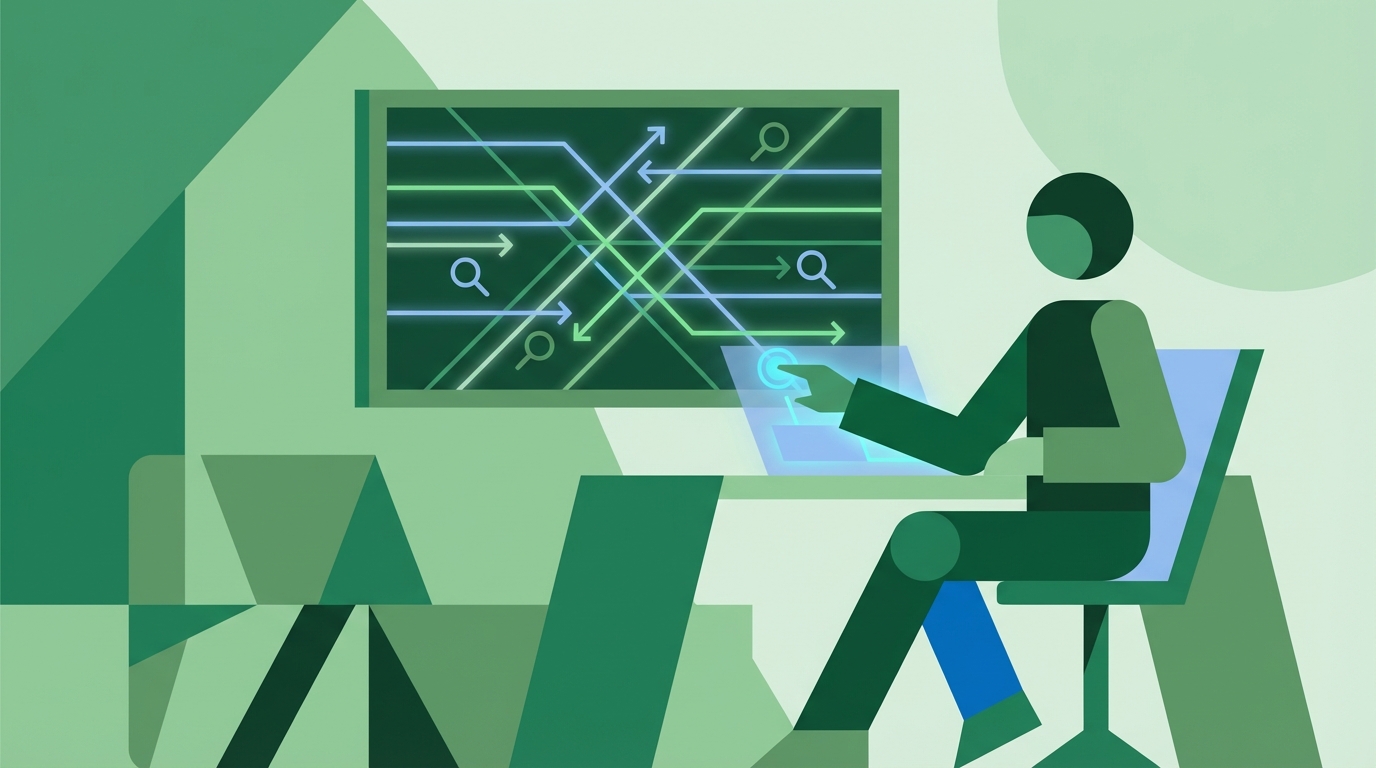
8. Analytics and Reporting: Measuring Success
You cannot manage what you do not measure. Analytics services provide the visibility needed to optimize campaigns and prove ROI. This goes beyond checking how many "likes" a post got; it involves deep data analysis to understand business impact.
Setting Key Performance Indicators (KPIs)
Effective reporting starts with defining the right KPIs. These should align with business goals:
- eCommerce: ROAS (Return on Ad Spend), Average Order Value, Cart Abandonment Rate.
- Lead Gen: CPA (Cost Per Acquisition), Lead Quality Score, Conversion Rate.
- Brand: Share of Voice, Brand Sentiment, Engagement Rate.
Attribution Modeling
Attribution is the challenge of determining which marketing touchpoint deserves credit for a sale. Did the customer buy because of the Facebook ad they saw on Monday, the blog post they read on Wednesday, or the Google search they did on Friday? Advanced analytics helps you move beyond "Last Click" attribution to understand the full customer journey, allowing for smarter budget allocation.
Custom Dashboards and Reporting
Data is useless if it's not understandable. Professional digital marketing services provide custom dashboards (using tools like Looker Studio) that visualize data in real-time. This transparency allows stakeholders to see exactly where their money is going and what results it is generating.
9. Choosing the Right Service Mix for Your Business
Selecting the right combination of services depends on your maturity, budget, and industry. A local dentist needs a different mix than a national SaaS company.
B2B vs. B2C Strategies
- B2B Companies: Often prioritize LinkedIn advertising, content marketing (white papers), email automation, and SEO for long sales cycles.
- B2C Companies: Often prioritize Instagram/TikTok ads, influencer marketing, aggressive retargeting, and eCommerce optimization.
In-House vs. Agency
You must decide whether to build these capabilities internally or hire an agency.
- In-House: Offers deep brand knowledge and total focus. However, recruiting and retaining top talent for every discipline (SEO, PPC, Dev, Design) is expensive and difficult.
- Agency: Provides immediate access to a full team of experts and enterprise-grade tools. It is often more cost-effective than hiring multiple full-time employees.
For a deeper dive into this decision, read our guide on 10 essential questions to ask before hiring a digital marketing agency. Furthermore, finding the right partner is critical; you can learn more about finding the right one for your business to ensure cultural and strategic fit.
Budgeting for Growth
A common rule of thumb is to allocate 5-15% of revenue to marketing, but this varies by growth stage. Startups often invest more aggressively to capture market share. The key is to view this spend not as a cost, but as an investment with a measurable return.
Frequently Asked Questions
How much should I spend on digital marketing services?
Budget depends on your goals and industry competition. A common benchmark is 7-12% of gross revenue for established businesses and up to 20% for startups seeking aggressive growth. However, the focus should be on CPA (Cost Per Acquisition); if you can acquire a customer for $50 and they are worth $500, you should theoretically spend as much as your operations can handle.
How long does it take to see results from SEO?
SEO is a long-term strategy that typically requires 4 to 6 months to show significant traction. Technical fixes may show results sooner, but building authority and ranking for competitive keywords is a cumulative process. For immediate results, PPC is the better option while your SEO matures.
Can I just do social media and ignore a website?
No, relying solely on social media is dangerous because you do not own the platform. Algorithms change, and accounts can be suspended. Your website is your owned digital real estate where you control the user experience, capture data, and process transactions without third-party interference.
What is the difference between an omnichannel and multichannel strategy?
Multichannel means being present on several platforms (e.g., Facebook, Email, Web) that may operate independently. Omnichannel connects these touchpoints so the user has a seamless experience; for example, an item added to a cart on mobile appears in their cart on desktop, and they receive a relevant email reminder if they don't check out.
Do I need a digital marketing agency?
If you lack the internal resources to execute a comprehensive strategy, an agency provides the necessary expertise and tools. Agencies bring cross-industry knowledge and specialized skills (like technical SEO or programmatic buying) that are difficult to hire for full-time.
Conclusion
Digital marketing services are the levers you pull to generate demand and capture revenue in a modern economy. It is not about choosing between SEO or PPC, but rather understanding how to make them work together to lower your acquisition costs and increase customer lifetime value.
The complexity of the digital landscape requires a steady hand and a strategic mind. You need to build a system that is measurable, scalable, and adaptable to change. Whether you are fixing your technical infrastructure, launching a paid media campaign, or automating your customer retention, the goal remains the same: sustainable growth.
If you are ready to stop guessing and start executing a strategy tailored to your business needs, the next step is finding the right partner. DMA Canada specializes in connecting businesses with the vetted agencies that can deliver these results.
Ready to transform your digital presence? Let DMA Canada match you with the experts who can build your engine for growth.